The Most Original Caprese Salad You Will Ever Make
Fresh Caprese Salad Recipe
A great Caprese salad is living proof that the most extraordinary food is often the simplest. Fresh mozzarella, ripe summer tomatoes, fragrant basil, high-quality olive oil, and a drizzle of balsamic glaze — that is it. Five ingredients, ten minutes, zero cooking required, and the result is one of the most beautiful and delicious dishes in all of Italian cuisine.
Caprese salad gets its name from the island of Capri off the coast of Naples, where this combination of ingredients became a beloved tradition. The colors — red tomato, white mozzarella, green basil — are said to represent the Italian flag. Whether or not that origin story is entirely accurate, it is a beautiful dish that has earned its place as a classic for good reason.
The catch with Caprese salad is that there is nowhere to hide. Every ingredient is front and center, fully exposed. Which means the quality of what you buy matters more with this salad than almost any other recipe. Use the ripest tomatoes you can find, the freshest mozzarella you can afford, and the best extra virgin olive oil in your cabinet. The results will speak for themselves.
How to Choose the Best Ingredients
The Tomatoes
This is where most Caprese salads fail before they even start. Pale, mealy, off-season tomatoes produce a mediocre salad no matter what else you do. Seek out peak-season heirloom tomatoes in summer for the most spectacular results — their intense flavor and beautiful colors make an unforgettable Caprese. Year-round, ripe Roma tomatoes or vine-ripened tomatoes from a farmers market are your best options. If a tomato smells like nothing, it will taste like nothing.
The Mozzarella
Fresh mozzarella packed in water or whey is non-negotiable for a proper Caprese. The low-moisture mozzarella used for pizza is a completely different product — firmer, drier, and without the creamy delicate texture that makes Caprese special. If you can find buffalo mozzarella (made from water buffalo milk rather than cow’s milk), it is worth the extra cost — it has a richer, more complex flavor. Burrata is an even more luxurious option if you want to really impress.
The Olive Oil
Use the best extra virgin olive oil you have — the one you save for finishing dishes rather than the everyday cooking oil. Its fruity, peppery flavor is one of the key elements of a great Caprese and will be very apparent since it is used raw.
Ingredients
- 3 large ripe heirloom or Roma tomatoes, sliced 1/4 inch thick
- 8 oz fresh mozzarella, sliced 1/4 inch thick
- 1 large bunch fresh basil leaves
- 3 to 4 tablespoons high-quality extra virgin olive oil
- 2 tablespoons balsamic glaze (not balsamic vinegar — the glaze is reduced and sweeter)
- Flaky sea salt such as Maldon
- Freshly cracked black pepper
Step-by-Step Instructions
Step 1: Bring Everything to Room Temperature
This step is important and often overlooked. Remove the mozzarella from the refrigerator at least 30 minutes before serving. Cold mozzarella is firmer and less flavorful than room temperature mozzarella. Similarly, never store tomatoes in the refrigerator — cold destroys their flavor and texture.
Step 2: Slice and Arrange
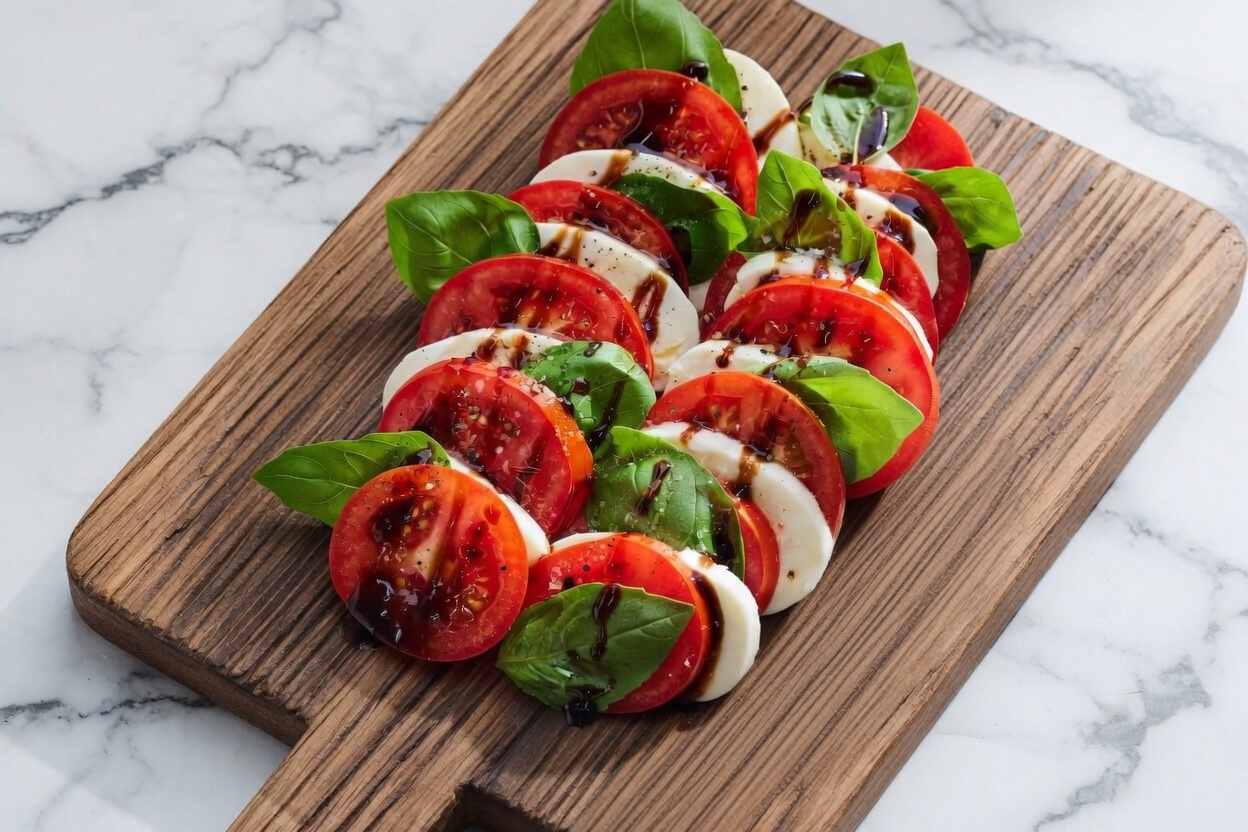
Slice the tomatoes and mozzarella to the same thickness — about 1/4 inch. On a large platter or individual plates, alternate and slightly overlap the tomato and mozzarella slices in a row or circular pattern. Tuck fresh whole basil leaves between each pair of slices so they peek out attractively.
Step 3: Season and Dress
Drizzle the olive oil generously over the entire arrangement. Then drizzle the balsamic glaze in a thin zig-zag pattern across the top. Finish with a generous pinch of flaky sea salt and freshly cracked black pepper. The salt will help draw out the tomato juices slightly, creating a natural dressing that pools beautifully on the plate.
Step 4: Serve Immediately
Caprese salad is at its absolute best the moment it is dressed and served. Bring it straight to the table and encourage everyone to eat it right away.
Variations and Upgrades
- Burrata Caprese: Replace the fresh mozzarella with a whole ball of burrata torn open at the table. The creamy interior spills out and mingles with the tomato juices for something genuinely spectacular.
- Peach Caprese: In peak summer, alternate ripe peach slices with the tomato and mozzarella for a sweet and savory variation that is absolutely stunning.
- Caprese skewers: Thread cherry tomatoes, fresh mozzarella balls, and basil leaves onto skewers for a party-friendly version that guests can grab easily.
- Add prosciutto: Drape thin slices of prosciutto di Parma over the arranged salad for a saltier, more substantial version.
Serving Suggestions
Caprese salad is a perfect starter before any Italian-inspired meal. It pairs beautifully as a side dish alongside our fresh bruschetta for a complete Italian antipasto spread, or alongside a main course of roasted chicken or grilled fish. For a light lunch, serve a generous Caprese salad with crusty bread for dipping in the olive oil and tomato juices that pool on the plate.
Nutritional Information (Per Serving)
Calories: approximately 220 per serving (based on 4 servings) | Protein: 12g | Fat: 17g | Carbohydrates: 6g
Frequently Asked Questions
Can Caprese salad be made ahead of time?
Slice and arrange the tomatoes and mozzarella up to 30 minutes ahead, but do not dress the salad until right before serving. Once dressed, the salt draws moisture from the tomatoes and the basil begins to wilt. For a party, prepare all your components and assemble at the last moment.
What is the difference between balsamic glaze and balsamic vinegar?
Balsamic vinegar is the base ingredient — thin, acidic, and intensely tangy. Balsamic glaze is balsamic vinegar that has been reduced until thick, syrupy, and sweet with a concentrated flavor. The glaze is much easier to drizzle decoratively and its sweetness balances the acidity of the tomatoes. Buy it pre-made at any grocery store or make your own by simmering balsamic vinegar in a small saucepan until reduced by half.
Can I use regular mozzarella instead of fresh?
You can but the result will be significantly less impressive. Low-moisture block mozzarella has a chewy, dry texture that lacks the creamy, milky quality that makes Caprese special. If fresh mozzarella is not available, try to find the best quality you can — even the fresh mozzarella balls in brine at most supermarkets are far superior to the block variety for this application.
How do I store leftover Caprese salad?
Honestly, Caprese salad does not store well once assembled. The tomatoes release liquid and the basil turns black quickly. If you have leftovers, store them in an airtight container without the basil (add fresh basil when serving) and consume within 24 hours. The flavors will still be good but the appearance will not be as beautiful.
Fresh Caprese Salad with Balsamic Glaze
Ingredients
Method
- Remove mozzarella from the refrigerator 30 minutes before serving. Room temperature mozzarella has dramatically better flavor and texture. Never refrigerate tomatoes.
- Slice tomatoes and mozzarella to the same 1/4 inch thickness for a beautiful uniform presentation.
- On a large platter alternate and slightly overlap tomato and mozzarella slices. Tuck fresh basil leaves between each pair of slices so they peek out attractively.
- Drizzle generously with extra virgin olive oil then drizzle the balsamic glaze in a thin zig-zag pattern across the top.
- Finish with a generous pinch of flaky sea salt and freshly cracked black pepper. Serve immediately.